Journal / E-commerce
Protect Your Brand: How to Stop AI Slop in Fashion Imagery
- By
- Dawn Camner
- Published
- Reading
- 6 minutes
- Topic
- E-commerce
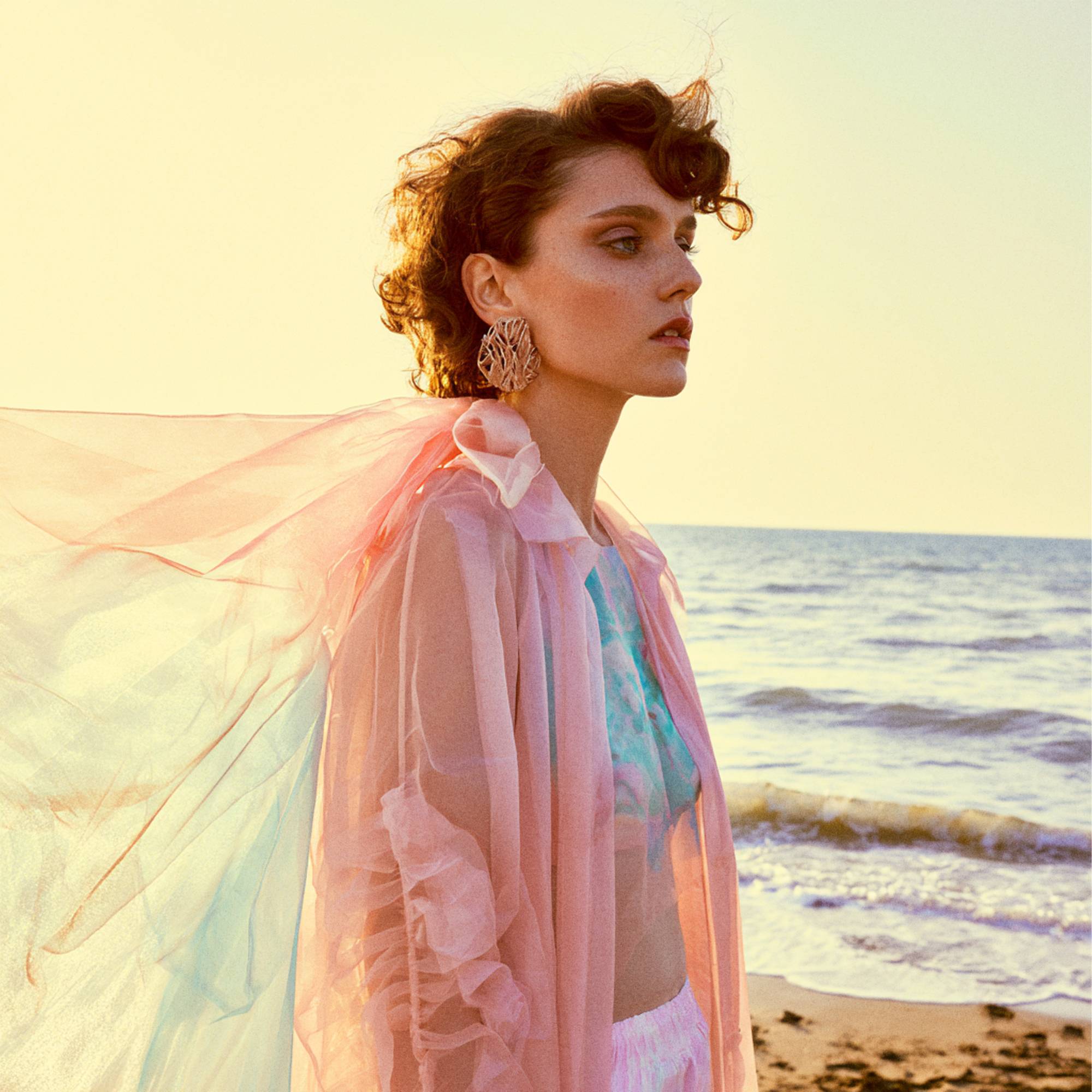
When AI replaces the people who know what a garment should look like, the brand pays for it.
What happened with SSENSE’s product photos
Last week, two designers took to Instagram to show what their clothes looked like in SSENSE’s product photos. Reese Cooper pointed to a puffer jacket with warped embroidery and zipper details, and a small hook blown up to the wrong size. Gerrit Jacob showed printed leather pants with seams that don’t exist, a smeared graphic print, and hems that seemed to disappear into the model’s shoe soles.
The Fader and Complex reported that the images appeared to be AI-generated. SSENSE has neither confirmed nor denied using AI. A spokesperson told the Montreal Gazette the company is “evolving our studio operating model to increase agility, accelerate content production, and further strengthen the product storytelling that defines the brand.” According to The Logic, as reported by Complex, around a dozen creative staff across photo, retouching and cosmetics were let go in June.
Those aren’t small glitches. To a designer, the zipper, the seam and the print are the product.
Why details matter in fashion product photography
Online, the product page is the fitting room. A shopper can’t touch the fabric or try on the fit, so they trust the photo to tell the truth. When that photo invents a seam or drops a trim, three things break at once:
- The customer buys something that isn’t what arrives at their door.
- The designer sees their work misrepresented in public, by a retailer they trusted with it.
- The brand teaches its audience that its images can’t be believed.
The last one is the expensive one. Trust takes seasons to build, and one Instagram Story can dent it overnight.
The real problem with AI-generated images is missing taste
We’re not anti-AI. We use it every day. But this story isn’t really about a model that hallucinates, because every image model hallucinates. It’s about what happens when nobody left in the workflow has the eye to catch it.
A trained retoucher would have flagged warped embroidery in seconds. A photographer would know pants don’t tuck into a shoe sole. A designer would notice what Cooper did in one of his posts: “Whys the tape disappear when the shirt is closed.”
That’s what happens when real artists are replaced by tech people. Those creatives were never just a cost line. They were the quality control. Take them out, and speed goes up while taste goes to zero. And without taste, it’s slop.
Upskill, don’t replace: keep creatives in the loop
The answer isn’t to ban AI from the studio. It’s to put AI in the hands of the people who already know what good looks like. We need to upskill retouchers, photographers and designers, not replace them.
That’s how we built ADaS, a New York studio making AI imagery and video for high-end fashion and beauty brands. Our tagline is “super human.” for a reason: AI is the force multiplier, and human creatives direct every frame and sign off on every image. In practice, that means:
- Retouchers drive the tools. They spend less time on masking and cleanup, and more time on the judgment calls only a trained eye can make.
- The real garment is the source of truth. Photographers and stylists capture the actual sample correctly, and every AI output is checked against it.
- Brand teams approve against the sample, not the prompt. Final sign-off happens with the physical product in view.
The result is faster production and a lower cost per image, without handing your brand’s look to a system that has never held the garment. On real ADaS client work, that has meant 40 to 70% savings on price, depending on scope, and up to 60% less production time.
A checklist for brands using AI product photography
Before any AI-assisted image goes live, ask these questions:
- Is there a real photo of the actual garment that every AI output is checked against?
- Has a trained retoucher or photographer reviewed each image at full size?
- Do hardware, trims, seams, prints and logos match the physical sample exactly?
- Does the fit look like the fit? Hems, cuffs and drape should behave like the real fabric.
- Have the designer or brand partner seen the images before launch?
- Is one named person accountable for final sign-off?
- Can you pull and replace an image fast if a partner flags a problem?
- Are you training your creative team on the tools, instead of cutting them out of the process?
If you can’t say yes to every one, you aren’t saving money. You’re borrowing it from your brand.
Frequently asked questions
What is AI slop in fashion imagery?
AI slop is AI-generated or AI-edited imagery that looks polished at a glance but gets the product wrong: invented seams, warped hardware, smeared prints or a fit the garment doesn’t have. In fashion, where the photo stands in for the product, those errors mislead shoppers and misrepresent designers.
Can fashion brands use AI for product photography safely?
Yes, if trained creatives stay in charge. Shoot the real garment as the reference, have retouchers review every AI output against it, and get brand sign-off against the physical sample before anything goes live.
Why do AI product photos get garment details wrong?
Image models generate plausible pixels, not faithful copies. They don’t know that a hook is a specific size or that a print has to line up at a seam. Without someone who knows the garment checking the result, those mistakes ship.
What does it mean to upskill retouchers instead of replacing them?
It means training retouchers, photographers and designers to use AI tools inside their own workflow. The tools take on the repetitive work, and the people keep making the judgment calls. It replaces tasks, not taste.
How much can AI-assisted post-production save?
On real ADaS client work, our approach has saved 40 to 70% on price, depending on scope, and up to 60% on production time.
Keep the speed. Lose the slop.
AI can make your studio faster. Only people can make it good. If you want both, let’s talk.
Email us at hello@adas.nyc to talk about bringing AI into your studio without losing your eye.
About the author
Dawn Camner is an independent creative director and visual strategy consultant specializing in brand identity, marketing, editorial and presentation design, with a focus on entertainment, health and wellness, and beauty and fashion. A Miami native, she trained in the visual arts at New World School of the Arts and earned a bachelor’s degree in fine art from the Maryland Institute College of Art (MICA). Her clients include Billboard, The Hollywood Reporter, L’Oréal Luxe and Penn Medicine, and she has worked in-house in art direction at People and Us Weekly. At ADaS, she created the brand identity.